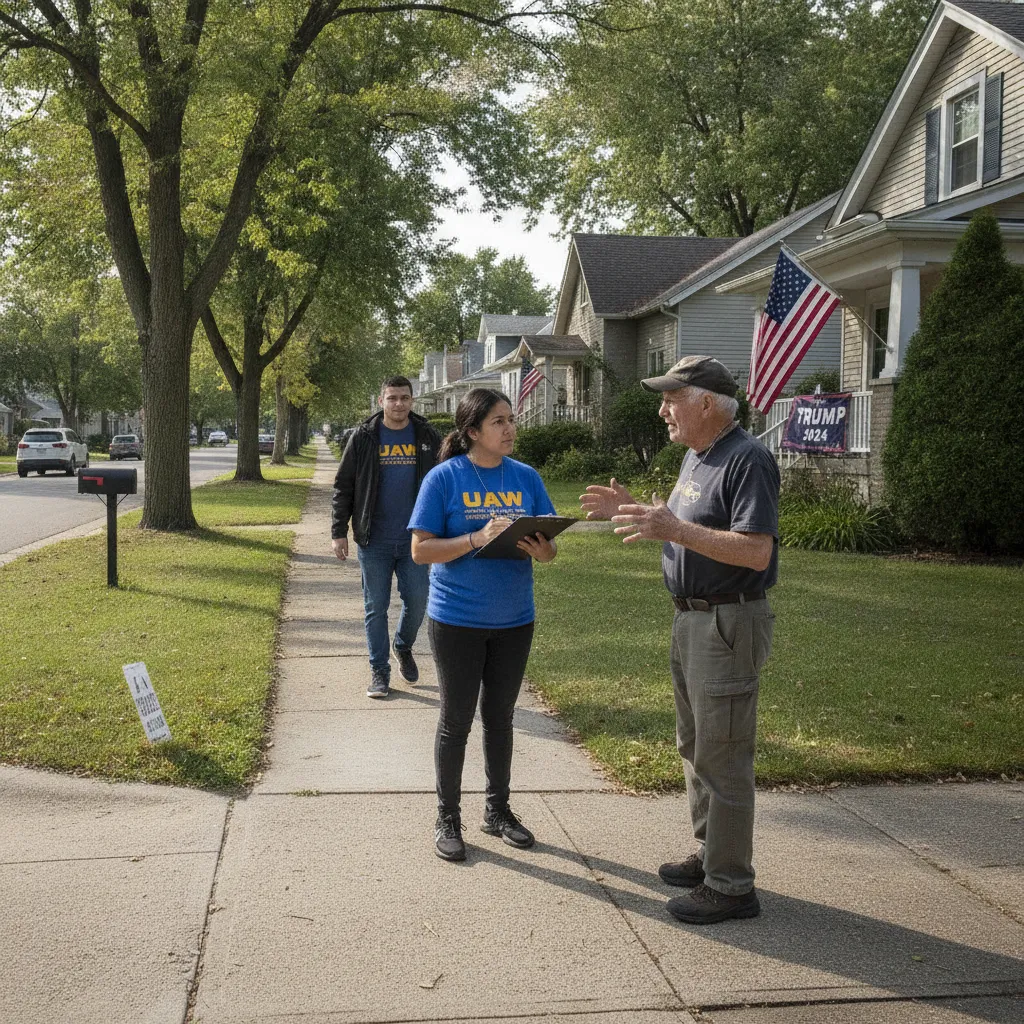
In the quiet suburbs of Macomb County, where manicured lawns often mask deep political fractures, United Auto Workers canvassers are fighting an uphill battle to reclaim their influence. Walking through neighborhoods that swung heavily toward Donald Trump in previous cycles, these organizers are finding that the traditional bond between organized labor and the Democratic Party has frayed. While long-time retirees like Walter Usakowski remain steadfast in their support for the union’s Democratic slate, they admit that many of their former coworkers in the shops have shifted their loyalties toward Republican populism.
This struggle reflects a wider identity crisis within the UAW as it attempts to navigate a membership torn between different visions of working-class advocacy. To some members, the choice is clear, viewing Republicans as agents of an elite class; to others, the GOP’s rhetoric on trade and deregulation feels more aligned with their economic survival. This divide was starkly evident during recent door-to-door campaigns, where one house might welcome a pro-labor flyer with enthusiasm while the neighbor across the street flatly refuses to engage.
Beyond the partisan rift, the union is still haunted by ghosts of its own making. Years of systemic corruption and high-profile scandals involving stolen dues created a vacuum of trust that current leadership is desperate to fill. Under President Shawn Fain, there has been a concerted push toward radical transparency and aggressive bargaining tactics against Detroit’s Big Three automakers. These victories provided a much-needed morale boost, but insiders acknowledge that repairing the relationship with rank-and-file members will be a marathon rather than a sprint.
As Michigan heads toward another pivotal election cycle, the UAW is betting on progressive candidates like Abdul El-Sayed to signal a shift in priorities toward universal healthcare and campaign finance reform. However, challengers continue to weaponize concerns over electric vehicle mandates and federal regulations to peel away union voters. Ultimately, the organization’s political relevance depends on its ability to convince its members that regardless of who they vote for in November, the union remains their strongest shield against corporate power.